


Anti-Hu CD235ab, HIR2, PE, 25µg
Price on request
| SKU | Price | Quantity |
|---|---|---|
| 60111PE.1 | Price on request |
Description
This monoclonal antibody from STEMCELL Technologies, clone HIR2 (GA-R2), targets human CD235ab, an epitope common to the N-terminal region of glycophorin A (CD235a) and glycophorin B (CD235b) on the erythrocyte membrane. These type I sialoglycoproteins carry the antigenic determinants for the MN and Ss blood groups and are expressed on early- and late-stage erythroblasts, mature erythrocytes, and erythroid cell lines including K562 and HEL, but not on other cell types. CD235a is the more abundantly expressed component, while CD235b is a relatively minor membrane constituent; the proteins contribute a mucin-like surface that minimizes aggregation of circulating red cells. The HIR2 clone binds with higher affinity to CD235a than to CD235b and agglutinates untreated erythrocytes.
The reagent is conjugated to R-phycoerythrin (PE) for fluorescence-based detection and is supplied as a clear liquid. It is of mouse origin with an IgG2b, kappa isotype. According to STEMCELL Technologies, the antibody is suitable for flow cytometry, immunofluorescence, immunocytochemistry, immunohistochemistry, immunoprecipitation, Western blotting, and CyTOF applications. STEMCELL Technologies' quality management system is certified to ISO 13485. The product is intended for research use only and is not for human or animal diagnostic or therapeutic applications unless otherwise stated. Store at 2–8°C and protect from light; titrate prior to use and include proper controls.
Handle in accordance with good industrial hygiene and safety practice, keeping containers tightly closed in a dry, cool, and well-ventilated place. According to the manufacturer's safety data sheet, the chemical is not classified as hazardous by the 2012 OSHA Hazard Communication Standard (29 CFR 1910.1200), and no special protective equipment is required under normal use conditions.
Other customers also viewed
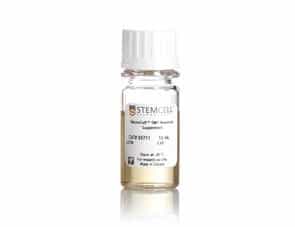
Anti-Beta-Tubulin III, AA10, 100ug
Price on request

Anti-Beta-Tubulin III, AA10, AD, 100ug
Price on request
Anti-Beta-Tubulin III, AA10, 25ug
Price on request
Anti-Beta-Tubulin III, AA10, AD, 25ug
Price on request
Anti-Biotin, C6D5.1.1, UC, 100µg
Price on request
Anti-Beta-Tubulin III, TUJ1, UC, 250µL
Price on request
Anti-Dextran, DX1, FI, 100tests
Price on request
Anti-Dextran, DX1, FI, 25tests
Price on request
Anti-Dextran, DX1, 100µg
Price on request
Anti-GFAP, 2E1.E9, 100µg
Price on request