


Cover Glass for Hemocytometer, 10/pk
Price on request
| SKU | Price | Quantity |
|---|---|---|
| 200-0641 | Price on request |
Description
This description has not been verified against the manufacturer's datasheet. Check the datasheet before you order, or ask us to confirm a specification. Ask us to confirm
Precision-ground for accurate manual cell counting, this specialized cover glass fits standard hemocytometer counting chambers used in in vitro cell culture workflows. Unlike conventional microscope cover slips, hemocytometer cover glasses are manufactured to a controlled thickness and optical flatness, producing a defined volume above the etched counting grid so cells settle in a single, uniform focal plane during microscopy.
Each glass rests securely on the chamber shoulders of Improved Neubauer, Bürker-Türk, and similar counting slides, supporting reproducible enumeration of suspension cells, primary cultures, and viability assays such as trypan blue exclusion. The set is supplied as a pack of 10 cover glasses, providing a practical quantity for routine laboratory use, while individual pieces can be cleaned and reused between counts when handled with care.
Offered by STEMCELL Technologies as part of its cell counting accessory line, this cover glass integrates with the company's broader portfolio of hemocytometers, viability stains, and counting workflows. Researchers working with hematopoietic cells, immune cells, and cultured mammalian lines rely on a precisely seated cover glass to prevent grid distortion, fluid leakage into the chamber moat, and inconsistent chamber depth, common sources of error in manual counts.
For best results, load the cell suspension into the chamber with a pipette first, then place the cover glass gently on top so capillary action draws the fluid under the glass without introducing bubbles. The flat optical surface supports clear visualization of the etched grid at microscope magnifications of 10x to 40x, and the rigid glass withstands repeated cleaning with ethanol or mild detergent between sessions.
Other customers also viewed
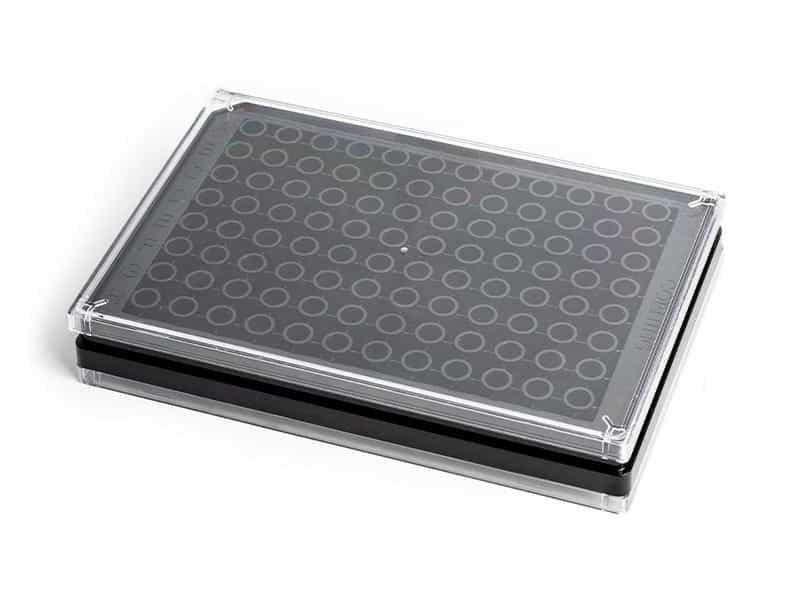
Corning 96-Well, Imaging, 16 Plates
Price on request

Hausser Hemocytometer with Cover Glass
Price on request
DAPI (HCl), 10mg
Price on request
DiOC6(3) Iodide, 25mg
Price on request
LysoBrite, Deep Red, 500tests
Price on request
LysoBrite, Green, 500tests
Price on request
LysoBrite, Red DND-99, 500tests
Price on request
MitochondrialTrackingDyeDeepRed,500tests
Price on request
Mitochondrial TrackingDye,Blue,500tests
Price on request
Phalloidin, II, 300tests
Price on request