


HOT FIREPol® Probe qPCR Mix Plus (ROX)
Price on request
| SKU | Price | Quantity |
|---|---|---|
| 08-14-00001 | Price on request |
Description
This 5x probe-based qPCR master mix from Solis BioDyne is optimized for real-time quantitative PCR assays using sequence-specific fluorogenic DNA-probe chemistries. It contains all components necessary to perform qPCR, with the exception of template, primers, and probe. The mix includes optimized components and HOT FIREPol® DNA Polymerase supplied in a proprietary reaction buffer that enables detection of low copy number targets. The polymerase is activated by a 15 min incubation step at 95°C, which prevents extension of non-specifically annealed primers and primer-dimers formed at low temperatures during qPCR setup.
Applications include detection and quantification of DNA and cDNA targets, profiling gene expression, microbial detection, and viral load determination. The mix composition features HOT FIREPol® DNA Polymerase, 5x Probe qPCR buffer with 15 mM MgCl2 (yielding a 1x PCR solution at 3 mM MgCl2), dNTPs including dTTP to improve reaction sensitivity and efficiency compared to dUTP, and ROX dye. ROX is an internal passive reference dye used to normalize the fluorescent reporter signal generated in qPCR.
The recommended reaction mix calls for 4 µl of 5x mix (1x final), 0.4-0.8 µl of each primer at 10 pmol/µl (200-400 nM final), 1 µl of probe (100-250 nM final), 1-5 µl of DNA template (1-50 ng/µl), and PCR-grade H2O up to a 20 µl total. The recommended cycling protocol is an initial denaturation at 95°C for 15 min (1 cycle), followed by 40 cycles of denaturation at 95°C for 15-20 s and annealing/elongation at 60°C for 60 s. Routine storage is at -20°C; shipping and temporary storage for up to 1 month at room temperature has no detrimental effect. The product is for in vitro use only and should be handled by trained laboratory personnel wearing laboratory overalls, gloves, and safety glasses.
Other customers also viewed
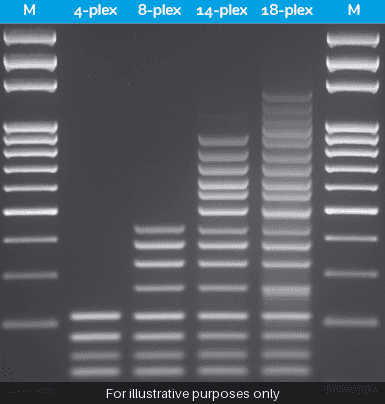
HOT FIREPol® Multiplex qPCR Mix
Price on request

SolisFAST® Lyo-Ready qPCR Kit with UNG
Price on request
SolisFAST® Lyo-Ready qPCR Kit with UNG
Price on request
SOLIScript®_ Fast 1-step RT-qPCR Mix with UNG
Price on request
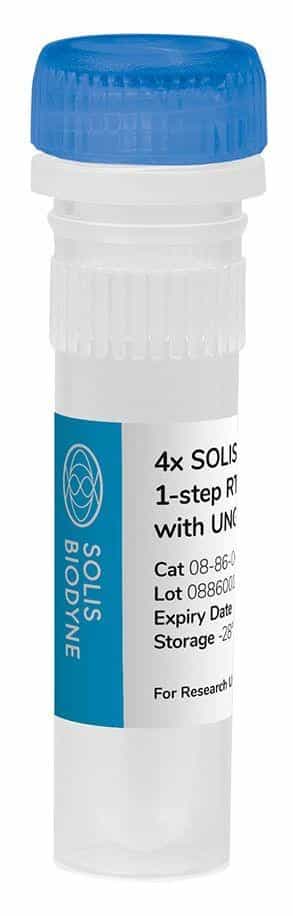
SOLIScript®_ Fast 1-step RT-qPCR Mix with UNG
Price on request
SOLIScript®_ Fast 1-step RT-qPCR Mix with UNG
Price on request
SolisFAST® Probe qPCR Mix (no ROX)
Price on request
SolisFAST® Probe qPCR Mix (no ROX)
Price on request
SolisFAST® Probe qPCR Mix (ROX)
Price on request
SolisFAST® Probe qPCR Mix (no ROX)
Price on request