
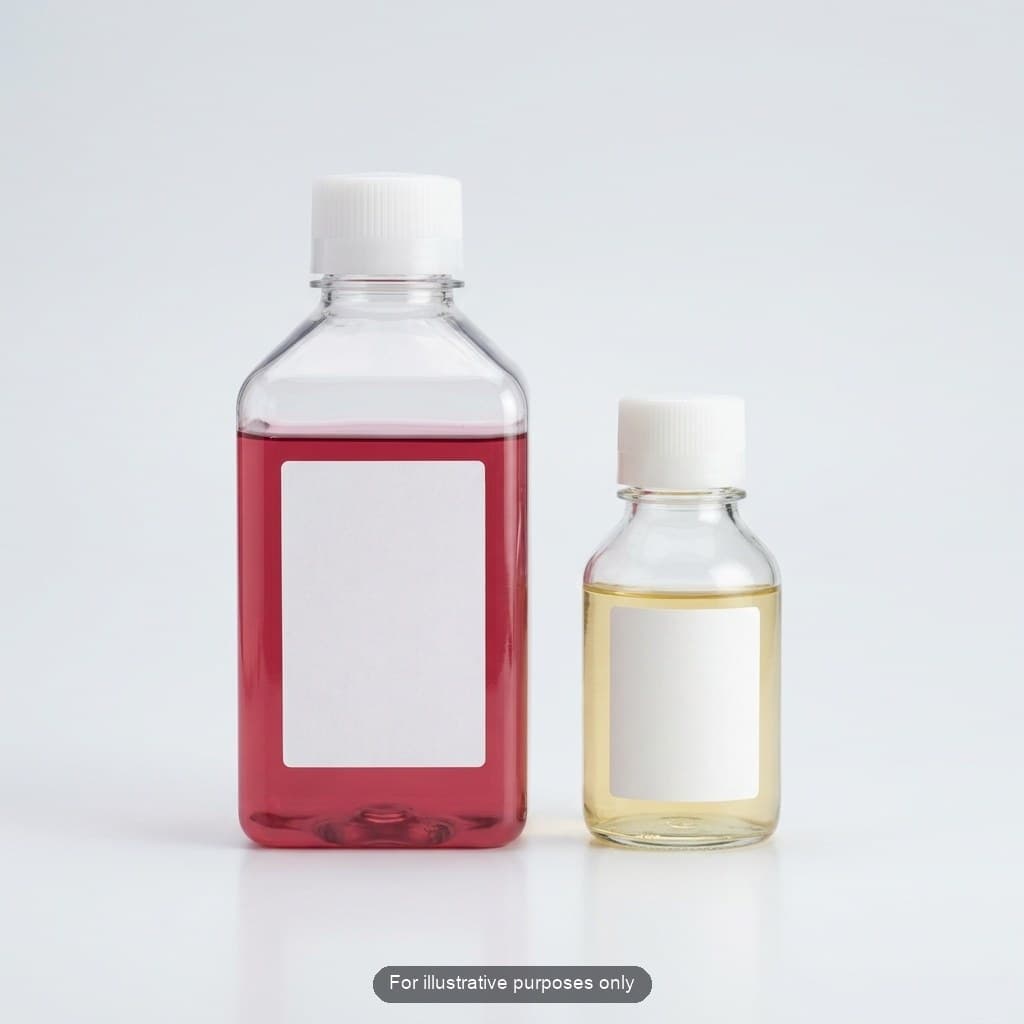

HepatiCult OIM Medium (Human)
Price on request
| SKU | Price | Quantity |
|---|---|---|
| 100-0384 | Price on request |
Description
From STEMCELL Technologies, this organoid initiation medium supports the establishment of human liver organoid cultures from ductal stem cell niches isolated from primary human liver tissue. It forms the initiation step in a three-medium workflow: HepatiCult™ OIM for initiation, HepatiCult™ Organoid Growth Medium (Human) for expansion, and HepatiCult™ Organoid Differentiation Medium (Human) for differentiation toward more mature hepatic cell types.
The kit comprises HepatiCult™ Organoid Basal Medium (Human), Organoid Supplement, and HepatiCult™ Organoid Growth Supplement (Human). The basal medium is stored at 2 - 8°C and is stable for 2 years from the date of manufacture, while the supplements are stored at -20°C. Quantification of organoid initiation efficiency shows a significantly higher organoid yield in HepatiCult™ OIM per gram of human liver tissue (mean ± SD; n=14) compared with a serum-free workflow.
Organoids initiated in this medium and expanded in HepatiCult™ OGM can be cultured in Corning® Matrigel® domes for routine culture, in dilute Matrigel® suspensions in spinner flasks for scale-up, in 96- and 384-well plates for high-throughput screening, or as organoid-derived two-dimensional monolayers on Transwell® inserts. When used to establish organoid-derived monolayers, cultures typically achieve 100% confluence within 2 - 3 days at the recommended seeding density and remain viable for at least 10 days once established. A California warning applies: this product can expose users to Progesterone, which is known to the State of California to cause cancer. The Organoid Growth Supplement contains material derived from human plasma, with donors tested and found negative for HIV-1 and -2, hepatitis B, and hepatitis C, though the component should be treated as potentially infectious.
Other customers also viewed
L-Glutamine (200mM), 100mL
Price on request
RPMI 1640, 500mL
Price on request
DMEM + 4500 mg/
L D-Glucose, 500mL Price on request
MEM-Non-essential AA (10mM), 100mL
Price on request
AggreWell 400 6-well, 1pk
Price on request
Organoid Embedding Sheet (6 pack)
Price on request
Fibronectin, 1 mg
Price on request
Vitronectin XF, 10 x 2 mL
Price on request
Vitronectin XF
Price on request
Laminin-521, 500 µg
Price on request