


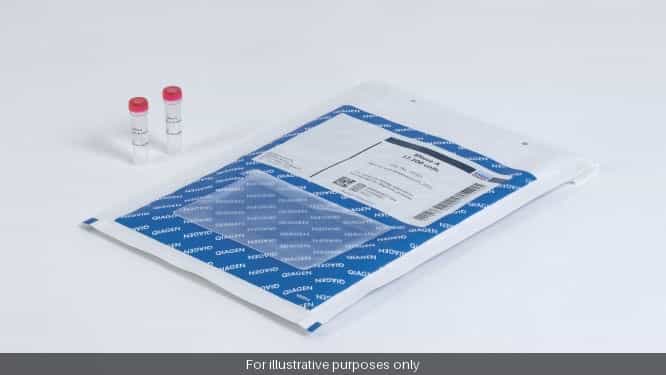
Proteinase K (5 ml)
Price on request
| SKU | Price | Quantity |
|---|---|---|
| RP107B-5 | Price on request |
Description
A recombinant broad-spectrum, subtilisin-related serine endopeptidase from QIAGEN, this ready-to-use Proteinase K Solution is derived from Parengyodontium album (Tritirachium album) and expressed in Komagataella phaffii (Pichia pastoris). The enzyme has a molecular weight of 28.9 kDa and is supplied at ≥20 mg/mL with a declared activity of ≥800 U/mL. It is certified RNase-free and DNase-free, with residual DNA content ≤200 pg/mL and bioburden ≤1 CFU/mL.
The enzyme maintains a working temperature range of 20–65°C with optimum activity at 50–56°C, and a working pH range of 4.0–12.0 with optimum activity at pH 7.5–8.5; full activity is preserved over several hours within pH 6.5–10.0. It is typically used at 50–200 µg/mL on nucleic acid preparations at pH 7.5–8.5 and 37–55°C, with incubation times from 30 min to 18 h. Proteinase K cleaves peptide bonds preferentially behind hydrophobic, aliphatic and aromatic amino acids, with the smallest hydrolyzed substrate being a tetrapeptide. Activity is stimulated by 0.2–1% SDS or 1–4 M urea, while 1–6 mM Ca²⁺ protects the enzyme from autolysis and increases its thermal stability. The enzyme is not inactivated by chelating agents such as EDTA, chaotropic salts, detergents, metal ions, thiol reagents, or trypsin-specific inhibitors.
One unit of Proteinase K hydrolyzes urea-denatured hemoglobin producing color equivalent to 1 µmol tyrosine per 1 min at 37°C and pH 7.5 (Folin & Ciocalteu's method), with 1 U = 1 mAnsonU. The storage buffer contains 10 mM Tris-HCl pH 7.5, 1 mM (CH3COO)2Ca and 50% glycerol. On arrival, the product should be stored at –20°C, +4°C or room temperature (not above 25°C), at which it retains activity ≥800 U/mL for at least 24 months in its original unopened container. The enzyme is widely used for isolating genomic, plasmid and high molecular weight DNA and RNA, and for digesting structural proteins and chromatin during nucleic acid preparation.
Other customers also viewed
RNase A (17500 U)
Price on request
QIAGEN Proteinase K (2ml)
Price on request
QIAGEN Proteinase K (10 ml)
Price on request
QIAGEN Proteinase K
Price on request
QIAGEN Protease (7.5 AU)
Price on request
QIAGEN Protease (30 AU)
Price on request
TAGZyme DAPase Enzyme (2,5U)
Price on request
TAGZyme DAPase Enzyme (50 U)
Price on request
Puregene Proteinase K (5 ml)
Price on request
RNase A Solution (650 µl)
Price on request