


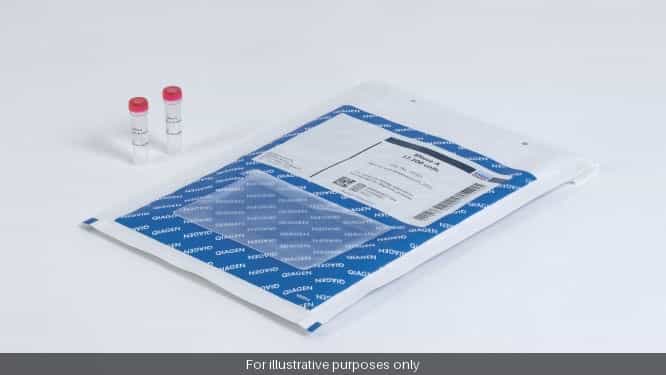
Proteinase K (20 mg)
Price on request
| SKU | Price | Quantity |
|---|---|---|
| RP103B-20MG | Price on request |
Description
This QIAGEN lyophilized powder enzyme is a subtilisin-related serine protease, supplied as a recombinant Proteinase K from Parengyodontium album (Tritirachium album). The 28.9 kDa protein is expressed in Komagataella phaffii (Pichia pastoris) and acts as a broad-spectrum endopeptidase for highly effective protein digestion across many laboratory applications.
Upon arrival, the lyophilized powder should be stored at –20°C. When kept in its original, unopened container, it maintains activity of ≥ 30 U/mg and specific activity of ≥40 U/mg for at least 24 months. One unit hydrolyzes urea-denatured hemoglobin, producing color equivalent to 1 µmol tyrosine per 1 min at 37°C and pH 7.5 by the Folin & Ciocalteu's method, with 1 U = 1 mAnsonU.
The enzyme is typically used at 50–200 µg/mL with nucleic acid preparations at pH 7.5–8.5 and 37–55°C, with incubation times ranging from 30 minutes to 18 hours. It cleaves proteins preferentially behind hydrophobic amino acids, with the smallest peptide hydrolyzed being a tetrapeptide. The working pH range is 4.0–12.0, with optimum activity at pH 7.5–8.5; full activity is maintained over several hours within pH 6.5–10.0. The working temperature range is 20–65°C, with optimum activity at 50–56°C. Activity is stimulated by 0.2–1% SDS or 1–4 M urea, while 1–6 mM Ca2+ protects the enzyme from autolysis and increases thermal stability. The enzyme is not inactivated by chelating agents (e.g., EDTA), chaotropic salts, detergents, metal ions, thiol reagents, or trypsin-specific inhibitors. It can be denatured by phenol extraction or inactivated by heating above 65°C, or with inhibitors such as PMSF or DIFP.
Other customers also viewed
RNase A (17500 U)
Price on request
QIAGEN Proteinase K (2ml)
Price on request
QIAGEN Proteinase K (10 ml)
Price on request
QIAGEN Proteinase K
Price on request
QIAGEN Protease (7.5 AU)
Price on request
QIAGEN Protease (30 AU)
Price on request
TAGZyme DAPase Enzyme (2,5U)
Price on request
TAGZyme DAPase Enzyme (50 U)
Price on request
Puregene Proteinase K (5 ml)
Price on request
RNase A Solution (650 µl)
Price on request