


Ms Recom TPO, 10 µg
Price on request
| SKU | Price | Quantity |
|---|---|---|
| 78072.1 | Price on request |
Description
A lyophilized recombinant thrombopoietin preparation from STEMCELL Technologies, produced in CHO cells and purified to ≥ 95% purity. Thrombopoietin (TPO) is described as a key regulator of megakaryocytopoiesis and thrombopoiesis in vitro and in vivo, stimulating the proliferation and maturation of megakaryocytes and helping to regulate circulating platelet levels. The cytokine also promotes survival, self-renewal, and expansion of hematopoietic stem cells and primitive multilineage progenitor cells, and is commonly used with stem cell factor (SCF) and Flt3/Flk-2 Ligand to expand primitive hematopoietic cells in culture.
The product is not classified as a hazardous substance or mixture under the Globally Harmonized System (GHS) and is supplied as a powder. It should be stored at -80°C and is stable as supplied for 12 months from the date of receipt. Specific activity is ≥ 5 × 10^5 units/mg (EC50 ≤ 2 ng/mL) as determined by a cell proliferation assay using MO7e cells, with an example EC50 of 0.92 ng/mL reported. The predicted molecular mass is 35 kDa, with an apparent molecular mass of approximately 75 kDa due to glycosylation. Endotoxin is ≤ 0.2 EU/μg protein as measured by kinetic LAL analysis. The product is for research use only.
The molecule is also known as c-MPL ligand, Megakaryocyte colony-stimulating factor, and MGDF, with UniProt accession number P40226. The TPO receptor, c-Mpl, is expressed at all stages of megakaryopoiesis from hematopoietic stem and progenitor cells to mature platelets. For preparation, the vial should be centrifuged before opening and the contents reconstituted in sterile water to at least 0.1 mg/mL by pipetting down the sides without vortexing. As a general guide, the reconstituted product should not be stored at 2 - 8°C for more than 1 week or at -20°C for more than 2 months, and repeated freeze-thaw cycles should be avoided.
Other customers also viewed
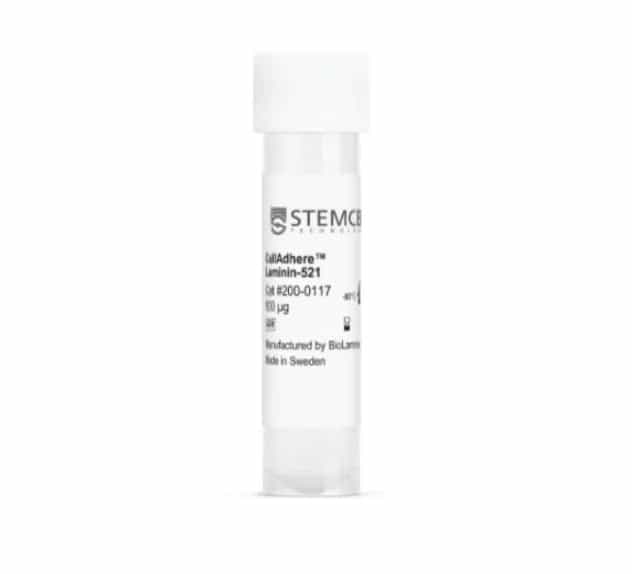
Laminin-521, 100 µg
Price on request
Annexin V, FI, 25tests
Price on request
Annexin V, PE, 25tests
Price on request
Wheat Germ Agglutinin, II, 1000ug
Price on request
Wheat Germ Agglutinin, IO, 1000ug
Price on request
Hu Abeta1-42 peptide (TFA salt), 0.5 mg
Price on request
Hu Apolipoprotein A-I, 100 _g
Price on request
Hu ASAM, 100 _g
Price on request
Hu ANGPTL2, 100 _g
Price on request
Hu Apolipoprotein H, 100 _g
Price on request