

HiSpeed Plasmid Giga EF Kit (5)
Price on request
| SKU | Price | Quantity |
|---|---|---|
| 1054575 | Price on request |
Description
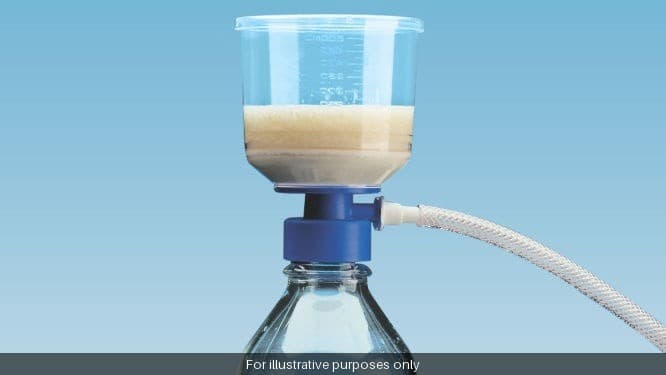
Designed by QIAGEN for large-scale preparation of transfection-grade DNA, this endotoxin-free plasmid purification system uses anion-exchange technology combined with vacuum processing and centrifugation. It processes 2.5 l of bacterial culture per preparation in 50 minutes and delivers yields of up to 10 mg of ultrapure supercoiled plasmid or cosmid DNA. The purified DNA is reported at endotoxin levels of less than 0.04 EU/µg, making it suitable for transfection, cloning, sequencing, gene silencing, and gene therapy research.
The workflow uses a modified alkaline lysis procedure followed by vacuum-driven purification through HiSpeed Giga-Tips containing patented QIAGEN anion-exchange resin. QIAfilter Mega-Giga Cartridges clear bacterial lysates from up to 2.5 liters of culture, removing SDS precipitates without centrifugation. Plasmid DNA eluted from the tip is concentrated and desalted by isopropanol precipitation using QIAconcentrator Giga Modules, and the final DNA is eluted in a single centrifugation step. An optional LyseBlue reagent provides visual identification of optimal buffer mixing. The system requires the QIAvac HiSpeed LS vacuum manifold for parallel processing of up to six samples per run, and is intended for high-copy plasmid or cosmid DNA.
The kits are intended for molecular biology applications and are not intended for the diagnosis, prevention, or treatment of disease. Each kit is manufactured under QIAGEN's ISO-certified Quality Management System and is quality-control tested against predetermined specifications to ensure consistent product quality. The QIAGEN-tips and QIAfilter Cartridges can be stored dry at room temperature (15–25°C) for at least 2 years without reduction in performance, and after adding RNase A, Buffer P1 should be stored at 2–8°C.
Other customers also viewed
QIAGEN Plasmid Mini Kit (100)
Price on request
QIAGEN Plasmid Midi Kit (25)
Price on request
QIAGEN Plasmid Midi Kit (100)
Price on request
QIAGEN Plasmid Maxi Kit (25)
Price on request
QIAGEN Plasmid Mega Kit (5)
Price on request
QIAGEN Plasmid Mega Kit (25)
Price on request
QIAGEN Plasmid Giga Kit (5)
Price on request
QIAfilter Plasmid Midi Kit (100)
Price on request
QIAfilter Plasmid Maxi Kit (10)
Price on request
QIAfilter Plasmid Maxi Kit (25)
Price on request